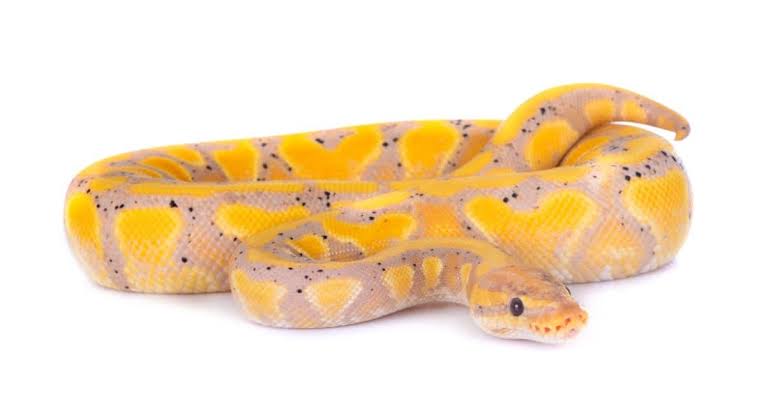
The Banana Ball Python is arguably one of the most stunning and beloved designer color mutations (morphs) in the reptile hobby today. Characterized by their striking bright yellow splotches, soft lavender-purple undertones, and unique aging process, these gentle constrictors make exceptional pets for beginners and seasoned enthusiasts alike.
Whether you are looking to purchase your first snake or researching genetics, this comprehensive guide breaks down everything you need to know about the Banana morph.
What is a Banana Ball Python?
First produced in captivity in 2003, the Banana Ball Python (Python regius) is a color mutation that reduces the dark black and brown melanin pigments found in wild-type (“normal”) ball pythons. In their place, it leaves behind a vibrant palette of pale yellow, cream, tan, and soft orange hues.
Note: The “Coral Glow” morph is genetically identical to the Banana morph. While they originally came from different founding bloodlines, they look the same and share identical genetic traits. The names are used interchangeably in the reptile community today.
Key Visual Features
- Juvenile Coloration: High-contrast neon yellows and deep coral oranges against a soft lavender or silver background.
- Adult Aging & Freckling: As Banana ball pythons age, they naturally develop small black spots across their body, often referred to as “freckles” or “pepper spots.” This cosmetic trait is entirely normal and highly sought after.
- Eyes: Dark brown or dark ruby rather than the pitch-black eyes of wild types.
Banana Ball Python Genetics & The “Sex-Linked” Quirk
From a biological standpoint, the Banana gene is an incomplete dominant (co-dominant) mutation. This means it has a “Super” form. If you breed a Banana to a Banana, you have a 25% chance of producing a Super Banana, which features an even cleaner, brighter yellow pattern with virtually zero black freckling as an adult.
Beyond color, the Banana gene features one of the most fascinating reproductive oddities in the reptile world: it is sex-linked, meaning the gene resides primarily on the sex chromosomes.
- Male Makers: If a male Banana was sired by a male Banana, he will produce clutches where almost all of the visual Banana offspring are male.
- Female Makers: If a male Banana was sired by a female Banana, he will produce clutches where almost all of the visual Banana offspring are female.
This reproductive trait is completely harmless to the snake’s health but remains an incredibly important factor for breeders.
Complete Care & Husbandry Requirements
Banana Ball Pythons share the exact same care requirements as standard ball pythons. They are solitary, nocturnal animals that thrive on a consistent environmental routine.
1. Enclosure Size
- Juveniles: A 10-to-20-gallon enclosure works well for young, growing snakes.
- Adults: Require a minimum of a 40-gallon breeder tank (or a 4’x2’x2′ PVC enclosure) to allow adequate room for movement and a proper thermal gradient.
2. Temperature & Humidity Gradient
Reptiles are ectothermic and rely on external heat to regulate their body temperature. Your enclosure must provide a warm side and a cool side:
| Enclosure Zone | Ideal Temperature | Heating Method |
|---|---|---|
| Warm Side (Basking) | 88°F – 92°F (31°C – 33°C) | Under-tank heat pad or ceramic heat emitter via a thermostat |
| Cool Side (Ambient) | 76°F – 80°F (24°C – 27°C) | Natural ambient room temperature variation |
Humidity: Maintain a baseline humidity of 50% to 60%. When your snake goes into a shed cycle (indicated by cloudy, blue eyes and dull skin), increase the humidity to 70% by misting or adding moisture-retaining substrate like coconut husk or cypress mulch.
3. Diet & Feeding Schedule
Ball pythons thrive on a diet of appropriately sized rodents. The width of the prey item should match the widest part of the snake’s body.
- Baby/Juvenile: Feed one rat pup or mouse every 7 days.
- Adults: Feed one appropriately sized rat every 10 to 14 days.
Frequently Asked Questions (FAQ)
Do Banana Ball Pythons have health issues or “wobble”?
No. Unlike certain morphs (such as the Spider morph, which carries a known neurological defect causing a head tilt or “wobble”), the Banana morph is entirely ethical and healthy. They suffer from no genetic health defects or neurological issues.
How much does a Banana Ball Python cost?
When first introduced, these snakes commanded thousands of dollars. Thanks to successful captive breeding, a single-gene Banana Ball Python is now highly accessible, typically ranging from $150 to $250 depending on the breeder and the sex-maker status.
Are they good for beginners?
Yes. They have an incredibly docile, calm temperament. When frightened, they are far more likely to curl up into a defensive ball (hence their name) rather than strike, making them exceptionally easy to handle.